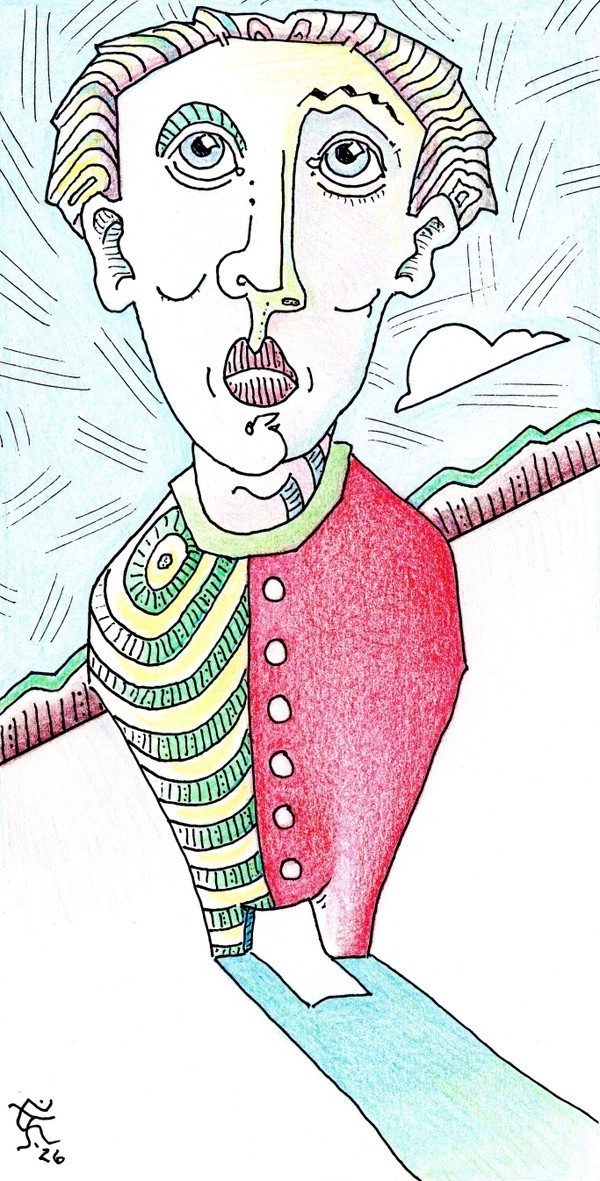









This drawing, Pleasantly Vacant, is a vibrant example of Neo-Expressionism, characterized by its distorted figures, bold line work, and a surrealist approach to perspective and anatomy.
The Portrait: The central figure features a highly elongated, stylized face that evokes the influence of Cubism and German Expressionism. The uneven placement of the eyes—one looking upward and the other slightly forward—creates a sense of internal conflict or wandering thought.
Asymmetrical Composition: The torso is split vertically down the middle, showcasing two distinct patterns. The left side (from the viewer's perspective) features a rhythmic, topographical pattern of green and yellow concentric circles, while the right side is a solid, textured red garment with a row of uniform white buttons.The Background: The background is minimal yet energetic. Thin, erratic black lines act as "hatch marks," giving the sky a sense of movement or static. A single, simple cloud and a sharp, geometric mountain range in the distance provide just enough context to suggest an outdoor setting.
Artistic Elements & Technique: High-contrast, black ink outlines that vary in thickness. The lines are deliberate but "shaky," contributing to a raw, hand-drawn aesthetic.
Color Palette: A mix of primary and secondary colors (red, yellow, blue, green). The coloring appears to be done with colored pencils or fine-tipped markers, showing visible texture and layering.
Perspective: The figure seems to be emerging from or stepping onto a blue pathway that recedes into a white void, creating a surreal "doorway" effect at the bottom of the frame . Symbolic Interpretation: The piece feels deeply psychological. The split torso suggests a duality of personality—perhaps one side representing a structured, uniform persona (the red suit) and the other representing a more organic, complex inner life (the green spirals). The upward gaze of the figure reinforces a theme of aspiration, daydreaming, or a search for meaning amidst a fragmented reality.
The artist's signature and the year '26 in the bottom left corner suggest this is a contemporary work, leaning into the "outsider art" style where emotional expression takes precedence over traditional anatomical accuracy.